What’s new

Explore the latest from Arcweave: features, updates, and announcements

Oct 29, 2026

New features

Let the Design Assistant answer questions and edit your project
Let the Design Assistant answer questions and edit your project

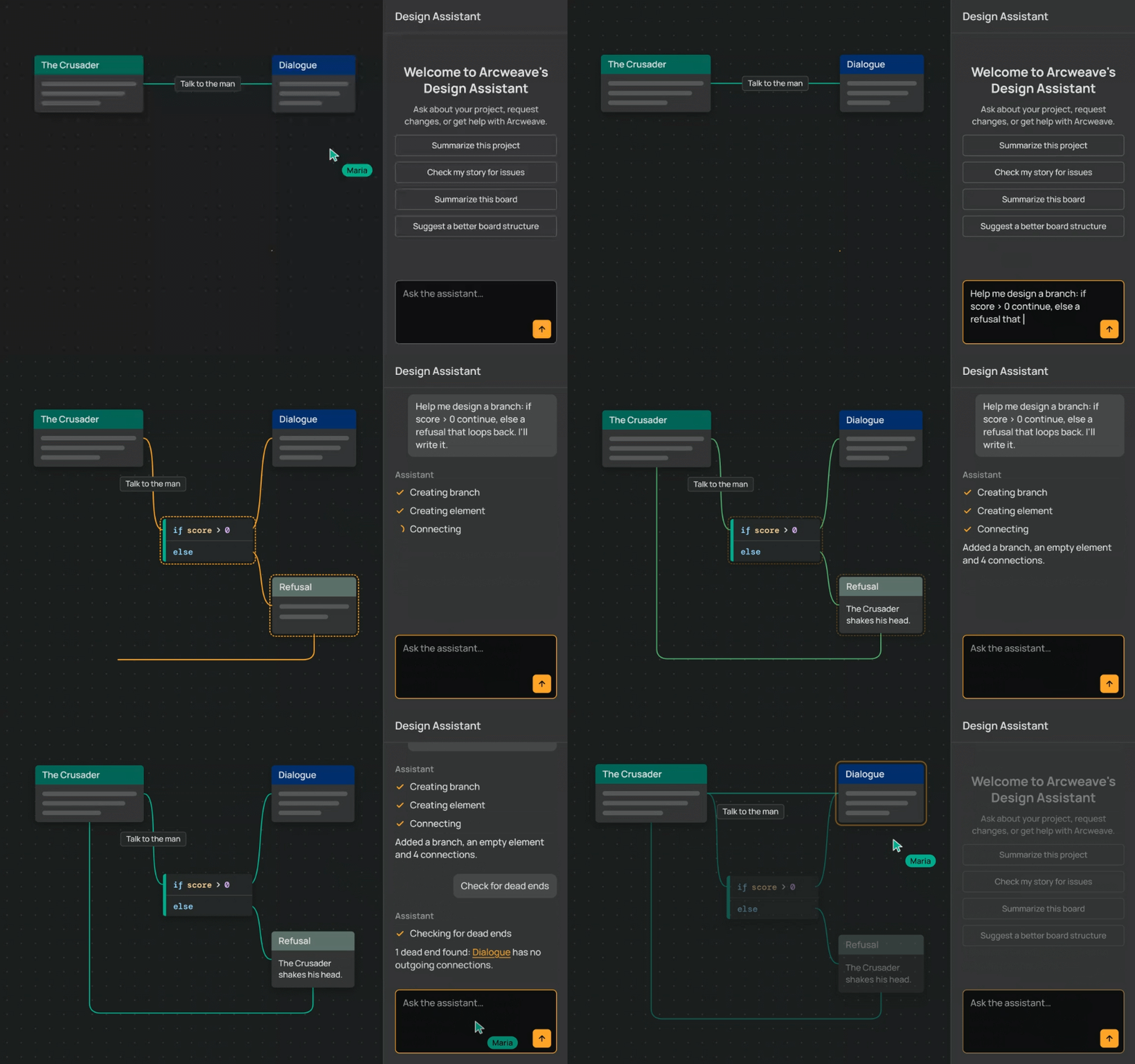
The Design Assistant is now connected directly to our documentation, so its answers about how Arcweave works come straight from the docs. It can also make changes for you, working directly on your boards, elements, connections, branches, variables, components and more.

It uses your project permissions and checks Arcscript before saving, and collaborators see its edits as they happen. The panel lists each step: use Show in project to jump to any changed item, or expand a failed step to see the error.

When the assistant is empty, it suggests prompts that match your project. Messages can run up to 2,000 characters, and you can copy both your messages and its answers.

The Design Assistant is available on all plans, within your plan’s AI credits.
Oct 21, 2026

New features

Edit connection paths for neater boards

Edit connection paths for neater boards

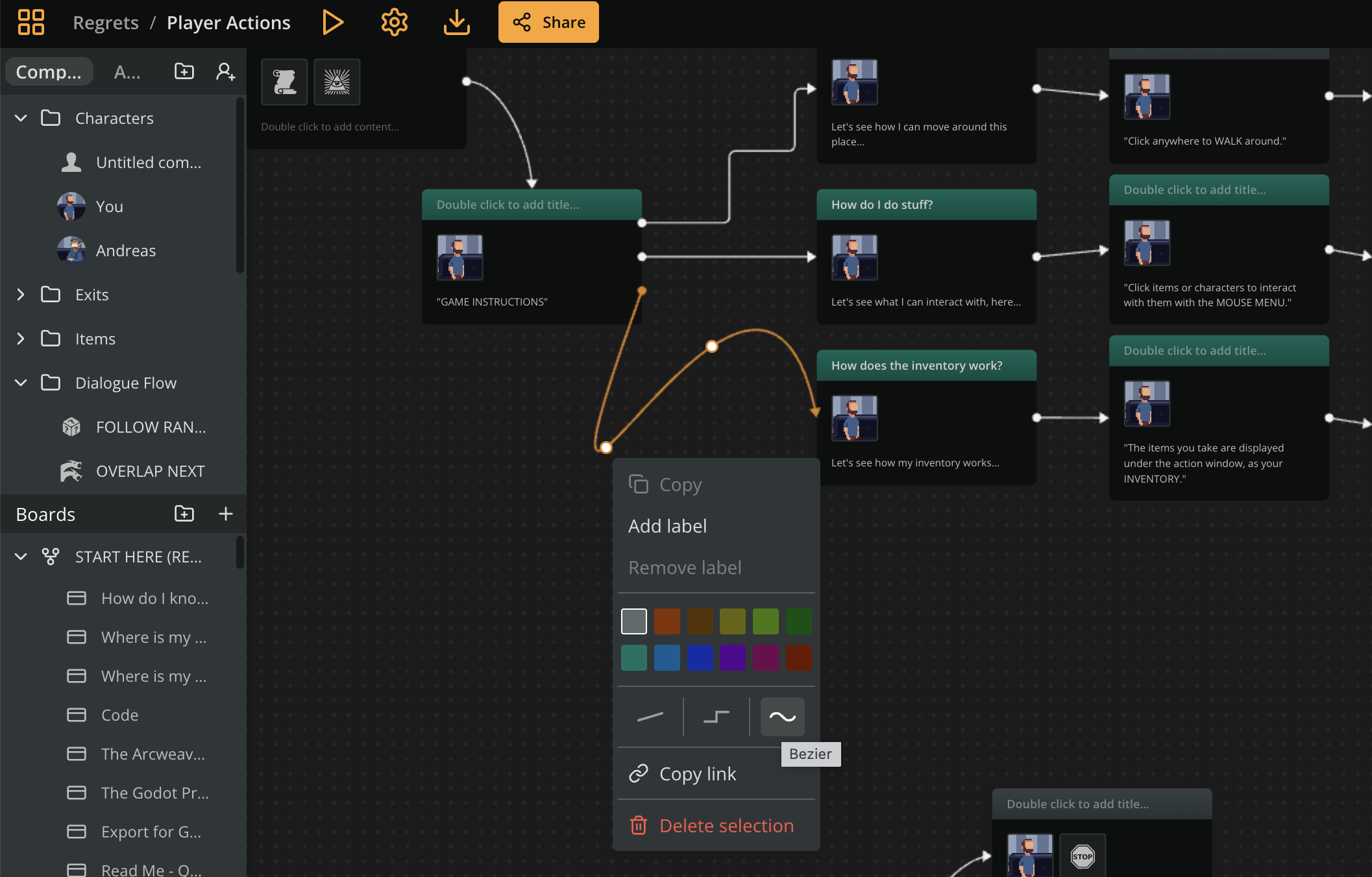
You can now reshape Bezier and Flowchart connections directly on the board. This gives you more control over how your story’s flow is laid out.

To reshape a Flowchart connection, drag one of its segments. To reshape a Bezier connection, drag either of its two handles. You can undo each drag, and double-clicking a handle switches the connection back to automatic routing.

Your edited paths are kept in image, PDF and game engine exports. JSON exports include them when Include coordinates is on. You can also read and set them through the REST API and MCP.

Oct 16, 2026

New features

Work on your Arcweave projects with your AI assistant

Work on your Arcweave projects with your AI assistant

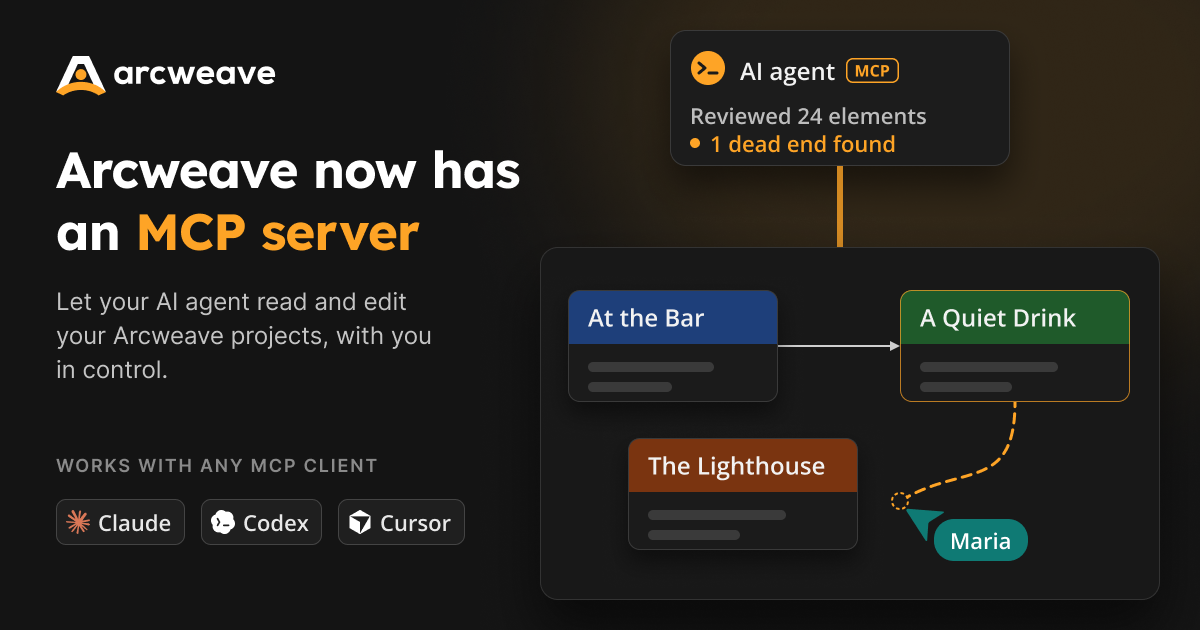
Arcweave now has a hosted MCP server, so the AI assistant you already use can work directly inside your projects. Connect Claude, Cursor, Codex, Gemini CLI, VS Code with GitHub Copilot or another MCP client. Then ask it to summarize a story, inspect branching logic, create elements and connections, manage components and assets, or export a project for your game engine.

You decide what your assistant can do. Start with read-only access, and keep your client’s approval prompts on before you let it make changes to a project.

The MCP server is available on the Team plan, with setup guides for every major client.

Sep 22, 2026

New features

Write to Arcweave with the REST API

Write to Arcweave with the REST API

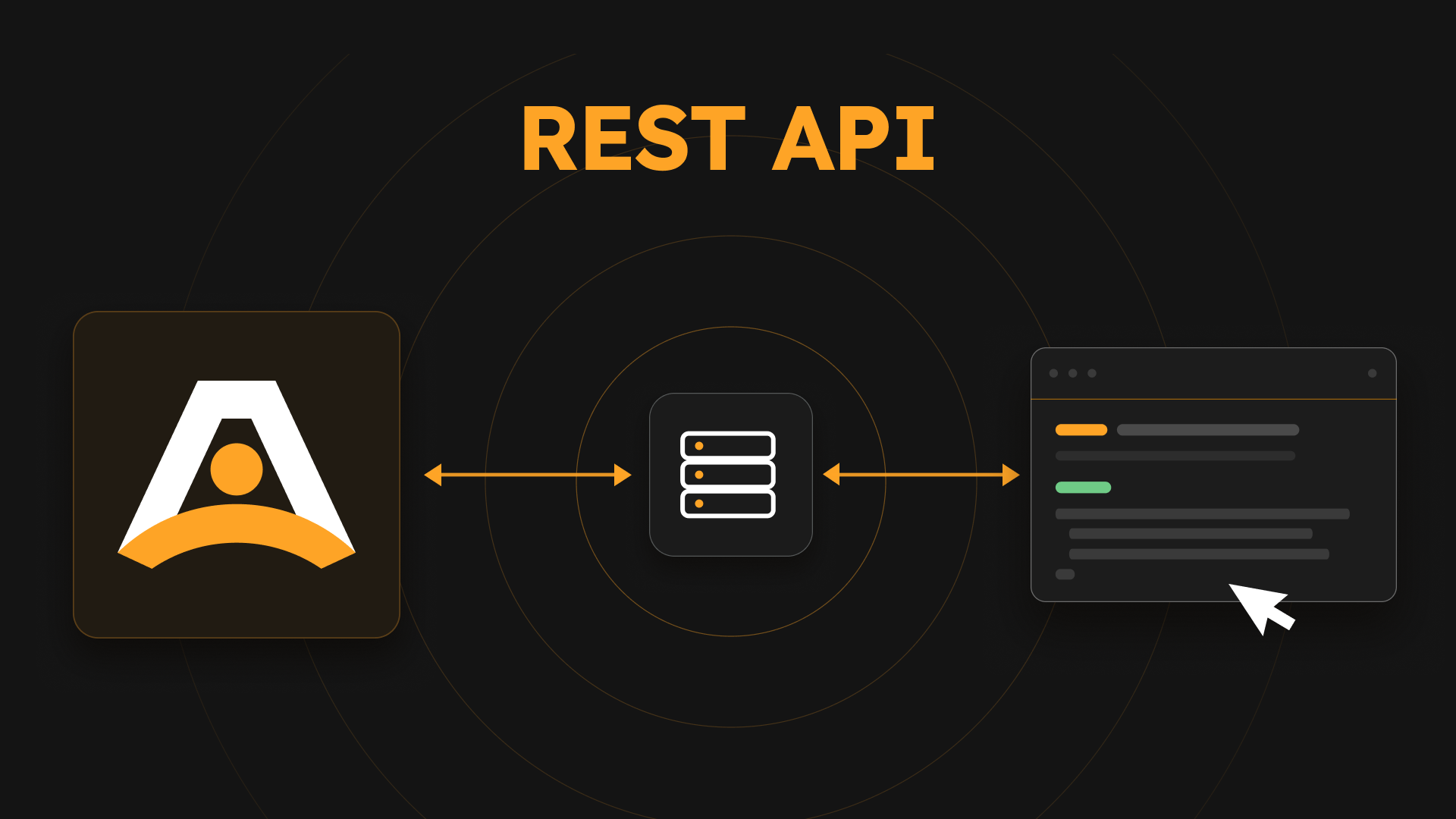
Arcweave can now connect more deeply with your production workflow. Our public REST API provides read and write access to projects in Team workspaces, helping you build custom integrations, automate repetitive work, and keep narrative content moving between Arcweave and your other tools.

Create and update project content, import and export projects, manage assets, components, and variables, or retrieve project comments and replies. Whether you are building an internal tool or connecting Arcweave to a larger content pipeline, the API gives your team more flexibility without taking narrative work out of its shared workspace.

API keys provide separate Read projects and Write projects permissions, so each integration receives only the access it needs. New keys start as read-only, and existing permissions can be changed from the workspace’s API section. Keys also respect the workspace and project permissions of their creator.

Ready to build? The complete documentation covers 104 endpoints across 14 resource pages, with authentication guidance, request examples, and a first-write walkthrough.

Sep 7, 2026

New features

Board & component attributes: variables, wherever you need them

Board & component attributes: variables, wherever you need them

Not every variable needs to be global.

With Board & Component Variables, you can now scope variables to exactly where they belong, helping you keep larger projects cleaner and easier to manage.

Use Board Variables for information specific to a scene or board, and Component Variables for attributes that belong to a specific component, such as a character’s health, an item's value, or a location's state.

Variables remain accessible wherever you need them through arcscript, with autocomplete making it easy to find and reference them.

More flexibility, less clutter, and better control over your project's game state.

Jun 4, 2026

New features

AI Credits, Usage Tracking, and Assistant Improvements

AI Credits, Usage Tracking, and Assistant Improvements

We’ve introduced monthly AI credit usage across all workspace plans, along with clearer visibility into how AI is used across Arcweave.

Workspace owners and users with billing permissions can now view a full AI usage summary in Billing, including credits used, credits remaining, usage status, and the monthly reset date. You can learn more about how monthly AI credits work here:
Monthly AI credits overview

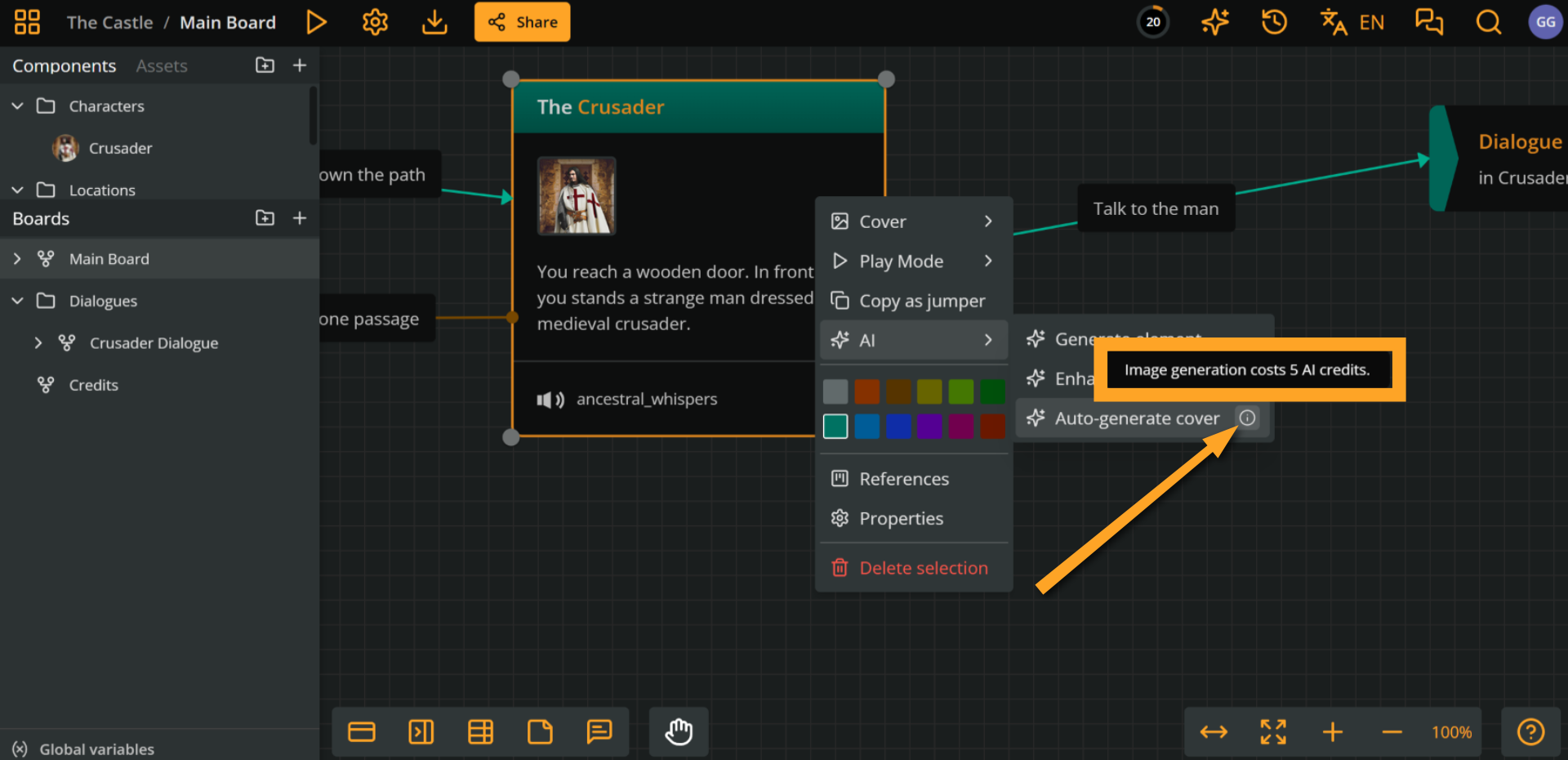
Moreover, AI actions now also display their credit cost directly in the interface, so usage is transparent before execution. If a workspace does not have enough credits available, the action will be blocked and the reset date will be shown.

More details about AI usage tracking are available here:
AI usage in billing

On the model side, we’ve upgraded the AI experience across Design Assistant, Element Generator, and Element Enhancer with a newer model for improved output quality. We’ve also improved how the assistant retrieves Arcweave documentation, using richer structured chunks with better metadata and linking for more accurate responses.

In larger projects, Design Assistant now also notifies you when responses are limited to the currently open board, helping keep generation scope clear while maintaining performance.

For more information on plans and AI availability, visit the pricing page.

May 26, 2026

New features

Edit Content Directly in Play Mode

Edit Content Directly in Play Mode

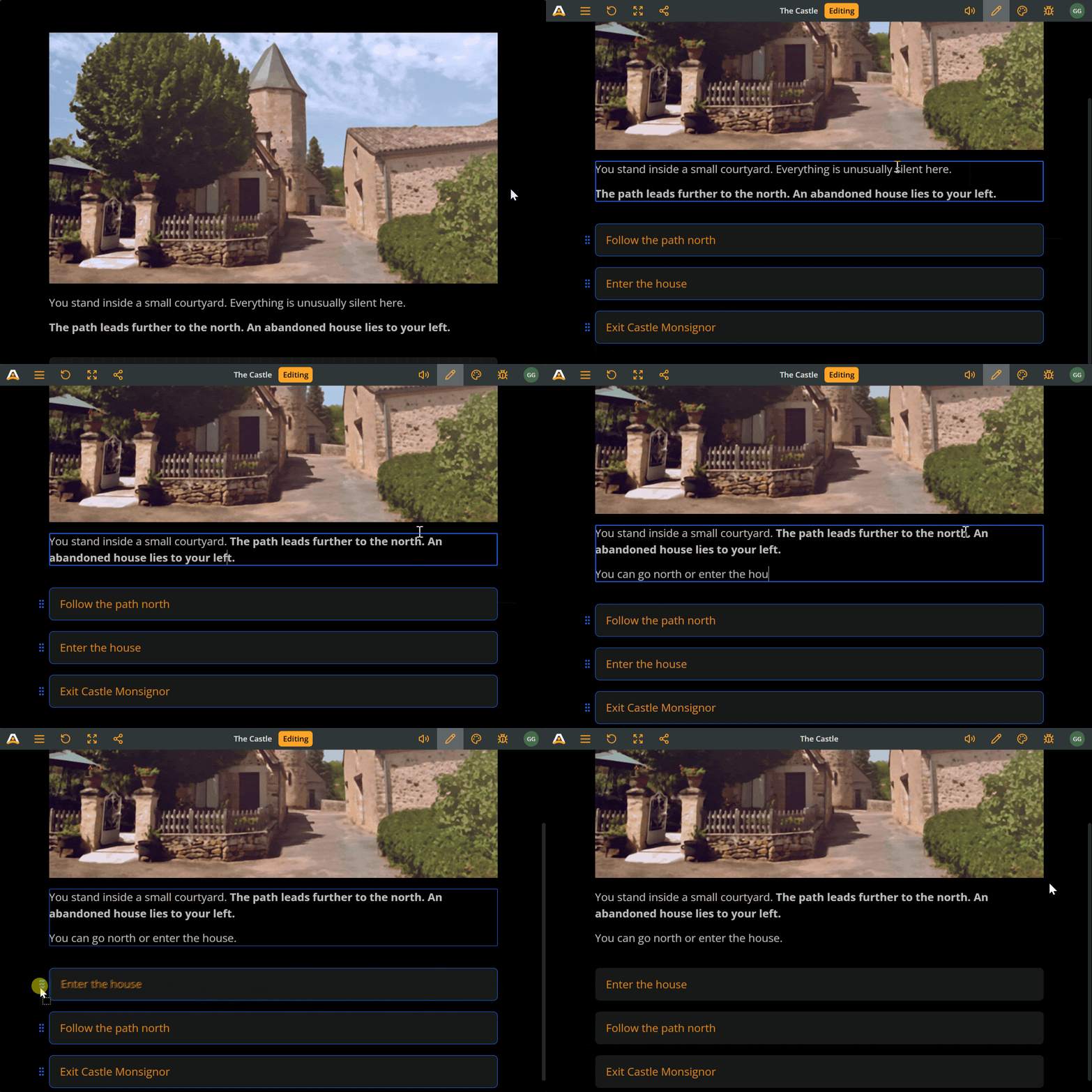
You can now edit story content directly inside Play Mode, without switching back to the board. Workspace and project owners and editors can update the current element’s text, edit option labels, and reorder choices while playtesting, making iteration much faster and more seamless.

Enter edit mode by clicking the pencil icon in the top menu or by double clicking an element’s text. While editing, story navigation is paused so you can safely make changes using the same rich text tools available on the board, including formatting and component @mentions. All changes are saved instantly to the project and remain available in future Play Mode sessions.

May 11, 2026

New features

Smarter AI image generation

Smarter AI image generation

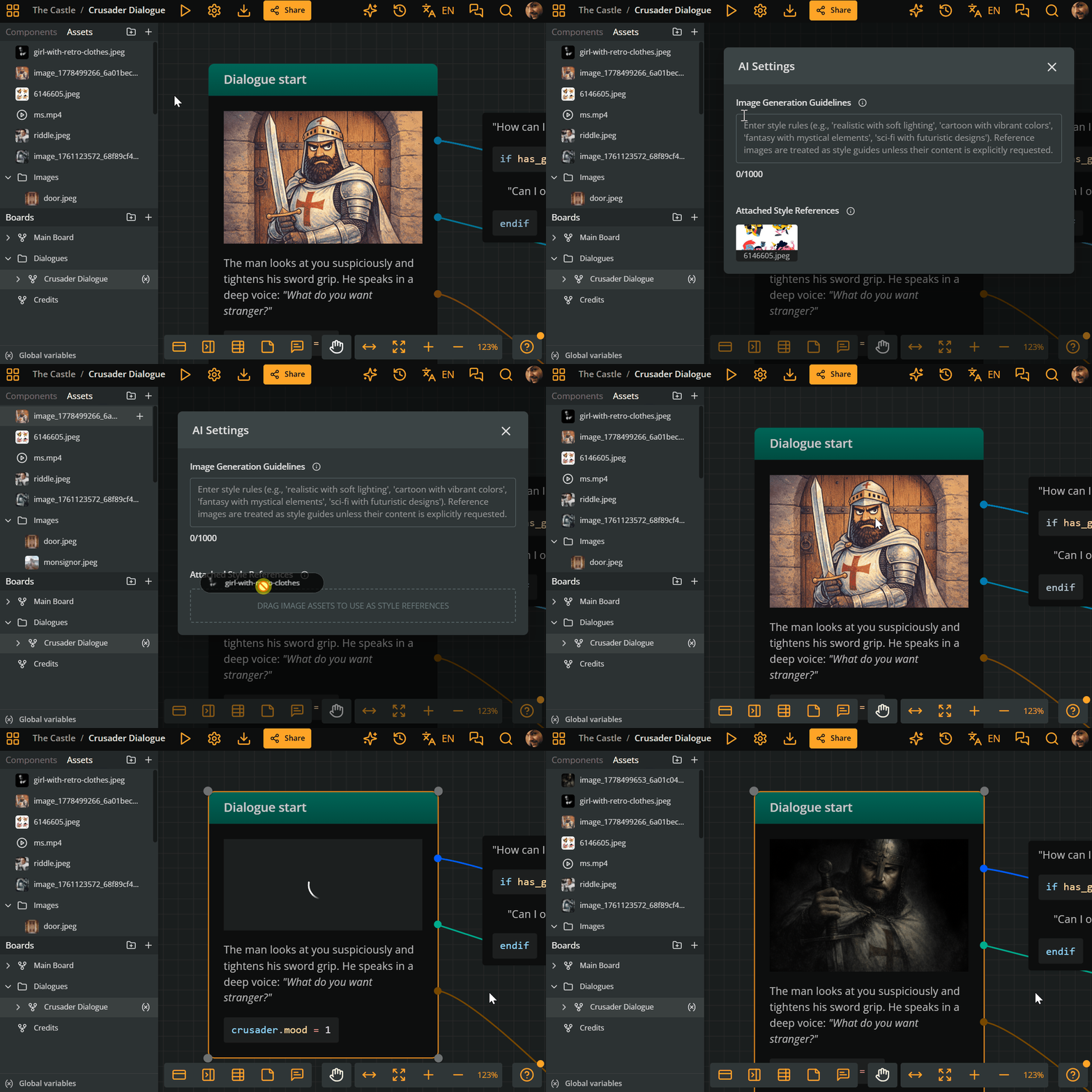
AI image generation just got a major upgrade. Arcweave now uses the new GPT image model for higher quality results and improved image generation workflows.

You can also use existing project image assets as style references, helping you generate visuals that stay consistent with your project’s artistic direction.

Apr 23, 2026

News and Updates

Unity Integration Tutorial - now with videos

Unity Integration Tutorial - now with videos

Getting your Arcweave project into Unity just got a lot easier. We've published a full step-by-step tutorial series walking you through the entire integration process, from first setup to a working 3D RPG scene.

The five-part guide covers installing the plugin, understanding the event-driven architecture, mapping Arcweave projects to gameplay systems, wiring up NPC interactions, and customizing your scene with new characters and dialogue triggers.

Parts 1 and 2 include video walkthroughs so you can follow along visually at your own pace, and the videos for the remaining parts are coming soon.

Apr 2, 2026

New features

Reposition and Resize Connection Labels

Reposition and Resize Connection Labels

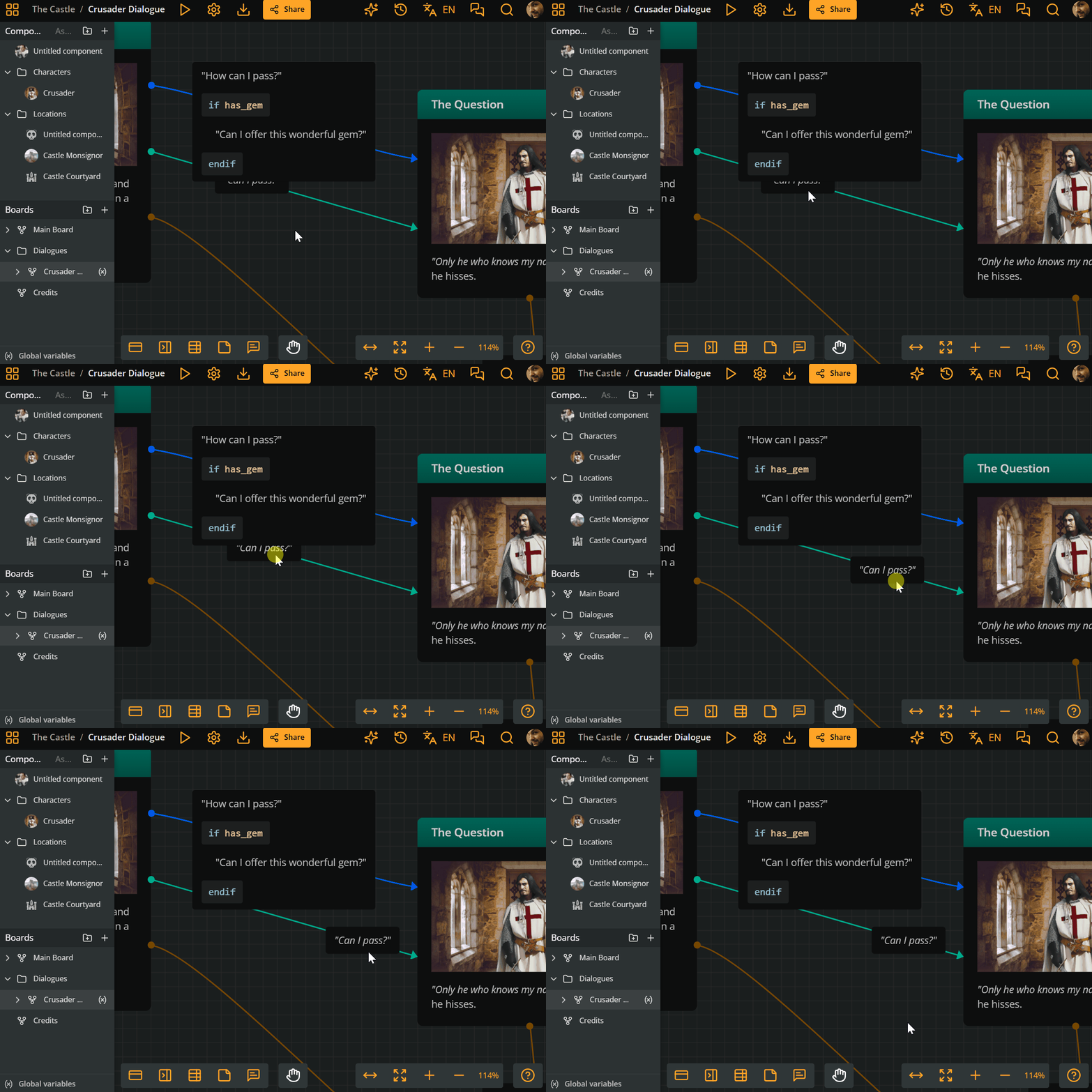
Overlapping connection labels kind of defeat their own purpose. If you can't read them, they're just visual noise, especially on dense boards.

You can now reposition any label along its connection. Click and drag the label, slide it to the right spot, and release. You can also resize it: just drag the left or right edge to adjust its width.

One more quality-of-life step towards cleaner boards. If you work with complex flowcharts, you'll feel the difference right away.

Ready to create amazing interactive stories?

Join thousands of game developers who have transformed their narrative design process.